The Australian Property Market in 2026: Is It a Good Time to Sell?

If you've been sitting on the fence about listing your home, you're not alone. Every seller asks the same question at some point: is now the right time, or should I wait? In a market as dynamic as Australia's, the answer depends on more than gut feeling. It depends on interest rates, buyer demand, supply levels and what's happening in your specific suburb.
Here's what's actually shaping the decision in 2026, and how to work out whether selling now makes sense for you.
The Factors Driving the 2026 Market
Interest rates and borrowing capacity
The Reserve Bank's cash rate decisions ripple through every part of the property market. Lower rates mean buyers can borrow more, which tends to support prices and bring more competition to open homes. Higher rates do the opposite, cooling demand and stretching the time properties sit on the market. Before you list, it's worth checking where rates currently sit and where they're forecast to head over the next six to twelve months, since that window often overlaps with your own selling timeline.
Supply and construction activity
Australia has spent years grappling with an undersupply of housing relative to population growth. When new listings are scarce, sellers tend to have the upper hand, because buyers have fewer options to choose from. Keep an eye on how many properties are coming onto the market in your area. A tightly held suburb with few new listings usually favours sellers, while suburbs seeing a wave of new stock can mean more competition and softer prices.
Population growth and migration
Australia's population continues to grow through both natural increase and migration, and that growth doesn't spread evenly. Some cities and regions are absorbing far more new residents than others, and that demand shows up directly in local property markets. A suburb near transport links, schools and employment hubs will typically see stronger demand than one further from those amenities, regardless of what the national headlines say.
Cost of living and buyer sentiment
Even with steady employment, cost of living pressures affect how confident buyers feel about taking on a mortgage. Consumer sentiment can shift a market as much as the fundamentals do. Auction clearance rates and days-on-market figures are a good real-time gauge of how buyers are actually feeling, rather than how they're feeling in theory.
Government policy and incentives
First home buyer schemes, stamp duty changes and any shifts in negative gearing or capital gains rules can all move segments of the market quickly. These policies tend to affect entry-level and investor-driven suburbs more than the top end, so their impact on your particular property will vary.
National Trends vs. Your Suburb
Here's the thing sellers most often get wrong: national property headlines rarely reflect what's happening on your street. "The Australian property market" isn't one market. Sydney, Melbourne, Brisbane, Perth, Adelaide and regional Australia can all be moving in different directions at the same time, and even within a single city, suburbs a few kilometres apart can tell completely different stories.
Before deciding whether to sell, look at:
Recent comparable sales in your specific suburb, not just your city
How many days similar properties are taking to sell
Auction clearance rates in your local government area
Whether local infrastructure or rezoning changes are underway
A national "hot market" headline means very little if your suburb has an oversupply of similar properties. Likewise, a "slowing market" headline shouldn't discourage you if your suburb is tightly held and in high demand.
Renovate First, or Sell As-Is?
This is often the real question underneath "is it a good time to sell." Even in a strong market, an unrenovated or dated property can sell for meaningfully less than a comparable home that's been refreshed. And in a softer market, presentation matters even more, because buyers have more choice and less patience for properties that need work.
The calculation isn't simply "renovate or don't." It's whether the renovation cost will be recovered, and then some, in the final sale price. A $15,000 kitchen refresh that adds $40,000 to your sale price is a straightforward win. A $60,000 renovation that only adds $50,000 in value is a loss, even though the home looks better.
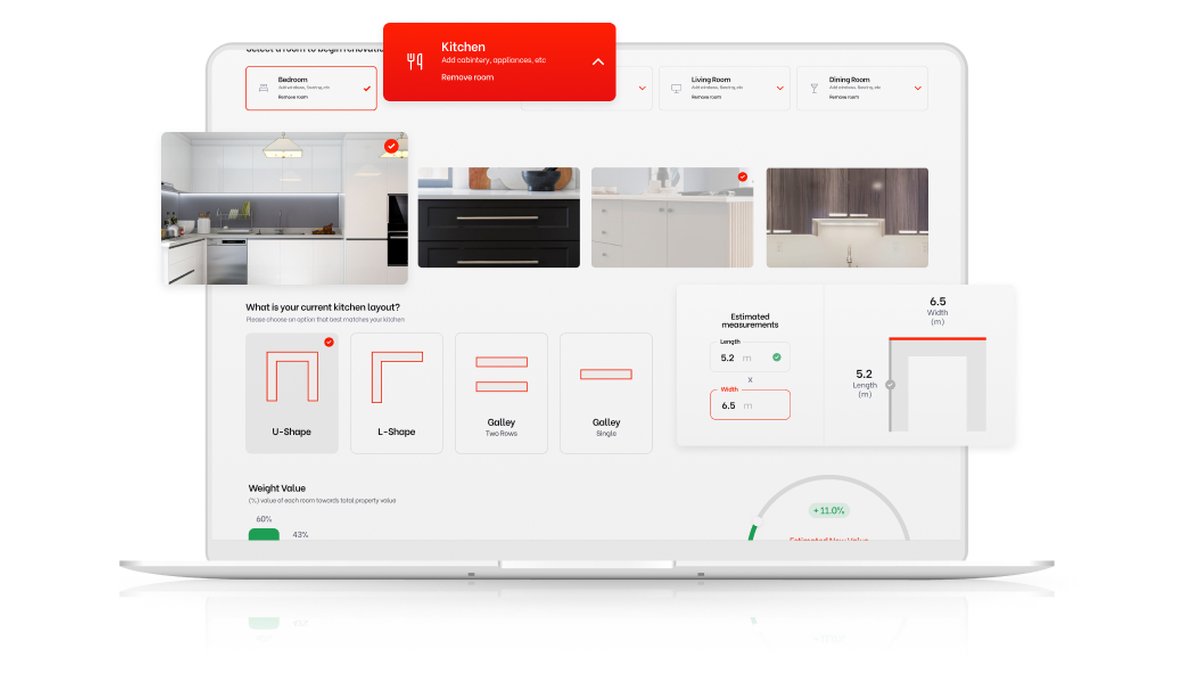
This is exactly the gap Renosell's estimator is built to close. Rather than guessing, you can model specific renovations against your property and see the projected impact on value before you spend a dollar. In a market where timing and presentation both matter, that clarity is the difference between a confident decision and an expensive guess.
So, Is It a Good Time to Sell?
There's no single answer that applies to every seller in every suburb. The honest version is this: it's a good time to sell if your local market has strong demand relative to supply, your finances support a move now rather than later, and your property is presented in a way that lets it compete for the buyers who are out there.
If your suburb is undersupplied and in demand, timing may already be in your favour. If your local market is softer, a well-targeted renovation may be what tips the scale, letting you list a property that stands out rather than one that blends into a crowded field.
Next Steps:
The best way to answer this question for your specific property is to stop generalising from national headlines and start looking at your numbers. Run your address through Renosell's estimator to see what a renovation could add to your sale price, and whether it's worth doing before you list, or whether your property is ready to sell as-is.
Property markets shift quickly, and the details in this article reflect general trends rather than real-time data. For current interest rates, clearance rates and suburb-level statistics, check the Reserve Bank of Australia, CoreLogic, or your local real estate body before making a decision.